There is a quiet frustration most people never admit out loud.
You open an app, scroll for a bit, maybe pause on a profile and even send a message, then nothing comes back. No reply, no spark, just a strange hollow feeling like you are present but somehow invisible.
When you do not already have a social circle backing you up, it cuts even deeper, because you are not just browsing. You are trying to build something from scratch.

Too many profiles, not enough real connections
Here is the part no one tells you: it is not that you are doing it wrong, but rather that you have been placed inside a system that was never designed to help you win.
Why Meeting People Online Feels So Much Harder Than It Should
At first glance, it seems simple enough, with millions of users, endless profiles and constant activity. So why does it feel like nothing ever sticks?
Take a typical evening. You spend 40 minutes swiping and match with four people. Two never open the chat, one sends "hey" and disappears, and the fourth replies once before ghosting after your second message. You close the app feeling exactly the same as when you opened it, only worse, because now an hour is gone.
That is not bad luck. That is simply the math of how these platforms are designed to work.

Scrolling… but going nowhere
Internal data shared by Hinge in 2023 showed that the median user sends roughly ten times more likes than they receive replies to, while Tinder has reported that a significant portion of profiles have not been opened in the past 30 days. You are not competing for attention against the people on screen; you are competing against everyone who looks vaguely similar to you, in a feed sorted by an algorithm optimised for your engagement rather than your success.
Three things consistently break the experience:
Volume without relevance. You are shown profiles rather than matches, with half being inactive, a quarter never messaging first, and the rest sorted by who keeps you swiping rather than who is actually likely to reply.
Cold message friction. There is no shared context, no introduction and no signal that the other person is even open to talking, so you hesitate, rewrite the message three times and still feel unsure. When no reply comes, it does not feel neutral; it feels personal.
Lost momentum. Connection runs on rhythm, so when you message someone on Tuesday, hear back on Friday and reply on Sunday, the thread is already dead. You stop trying not because you do not want connection, but because the process itself feels broken.
The Shift: Stop Searching, Start Getting Matched
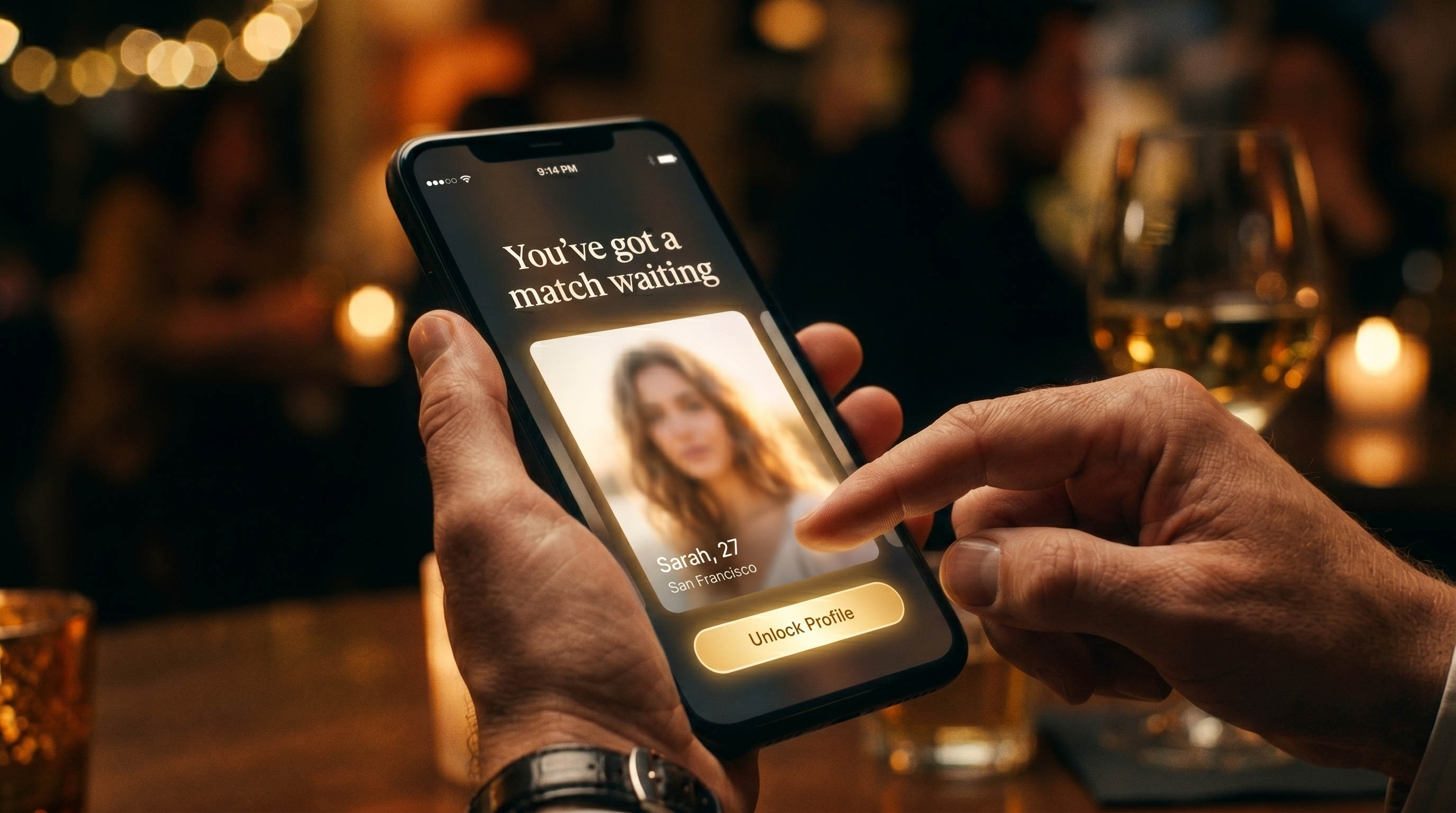
What if the right people came to you instead
There is a different way to approach this entirely. Instead of asking who you should message, flip the question and ask who is already likely to connect with you right now.
That single shift changes the entire experience, because you are no longer chasing attention. You are stepping into spaces where interaction is already happening.
How Match Based Discovery Actually Works
This is the part most articles skip over. Curated matching sounds like marketing language until you see what is actually underneath it, so here is the mechanism explained in plain terms.
A discovery layer pulls activity signals from multiple platforms simultaneously, tracking who logged in within the last hour, who replied to a message today and who joined this week. That activity data forms the first filter, which means inactive profiles never reach you.
The second filter is preference alignment. A short input of usually three to six questions covering what you are looking for, your conversation style and rough location narrows the active pool to people whose stated preferences overlap with yours. This is not compatibility in any deep sense; it is simply a way of removing obvious mismatches before they waste your time.
The third layer is timing. Rather than showing you a profile of someone who was last online in 2023, the system surfaces matches during the window when both parties are likely to be reachable within the next hour or two, which is the difference between a 4% reply rate and something closer to 25%.
The output is not your soulmate. It is simply a much smaller set of people who are active, roughly aligned and reachable right now. The rest is entirely up to you.
Why "We Found a Match for You" Lands Differently
There is a subtle psychological shift that happens when you see the words "we have found a match for you" rather than an open feed of strangers.
Browsing puts you in evaluator mode where you are constantly judging, dismissing and scoring. Being matched puts you into curiosity mode instead, where you find yourself wondering why this person was chosen and what made this a match. You are pulled in by intrigue rather than pressure.
It is the same reason a friend introducing you to someone at a party feels entirely different from simply spotting a stranger across the room. The framing shapes the interaction before a single word is spoken.
A Practical Approach When You're Starting From Zero
Stop relying on a single app.
Using one platform means working with one activity pool, one algorithm and one demographic skew. Systems that surface profiles across multiple sources significantly widen the pool and improve your timing.
Read activity signals before anything else.
Labels such as online now, active today and joined this week are not decoration. They are the difference between getting a reply and being met with silence, so if a profile does not show recent activity, skip it regardless of how appealing it looks.
Use the match as your opener.
When context already exists between you, the first message becomes much easier to write. Consider these two openers sent to the same person:
"Hey, how's your week going?"
versus
"Looks like we got matched on hiking and bad coffee. Which one do you want to defend first?"
The second works because it references something specific that the system has already established between you. You are not interrupting a stranger; you are picking up an existing thread.
Build flow, not perfect messages.
Keep three light conversations going rather than obsessing over one carefully crafted message. Momentum compounds quickly, and a single perfect message you spent twenty minutes writing will rarely outperform three casual ones sent in five.
Where Active Connection Is Actually Happening
Not all online environments are equal, and they certainly do not peak at the same times.
Curated matchmaking hubs surface people who are ready to engage rather than simply browse, while profile aggregators pull from multiple sources to widen the pool considerably. Interactive and AI assisted spaces, often dismissed by users, are surprisingly useful as a low-pressure way to warm up your communication style before live conversations. Live chat environments create instant momentum because the back and forth happens in real time.
The point is not to pick just one of these options but to stop being trapped inside a single app during its quiet hours.
The Mistakes That Keep People Stuck
The most common mistakes are staying in low-activity environments, trying too hard to impress rather than simply being readable as a person, and waiting too long to engage when online attention windows are short and timing consistently beats wording. Treating the whole process as a test rather than something you adjust as you go also holds many people back.
FAQ
What if I literally have no one to start with?
That is actually where match-based systems work best. You are not relying on an existing network; you are simply entering one that already exists.
Why do I get ignored on most apps?
Usually because a large share of the profiles you are seeing have not been active recently, and the ones that are active are getting flooded with messages. It is a matter of mismatch and timing, not personal rejection.
How do I get faster replies?
Two things will help: message people whose activity signals show they are online right now, and open with context that the platform has already given you. Both push reply rates up significantly compared to cold openers sent to inactive profiles.
Do I need to be confident for this to work?
Not at all. Lower-pressure environments such as match-based introductions, AI assisted chats and short live interactions allow confidence to build through practice rather than requiring it upfront.
The Shift in One Line: Stop trying to find the right person and start entering the right environment. Follow the activity signals and let connection unfold naturally from there.
Ready to Get Matched?
Skip the endless swiping and access verified active profiles to start real conversations right now.
Find My Match Now →Age verification required · Secure & discreet billing